Color Drenching: A Designer's Guide to the One-Color Room
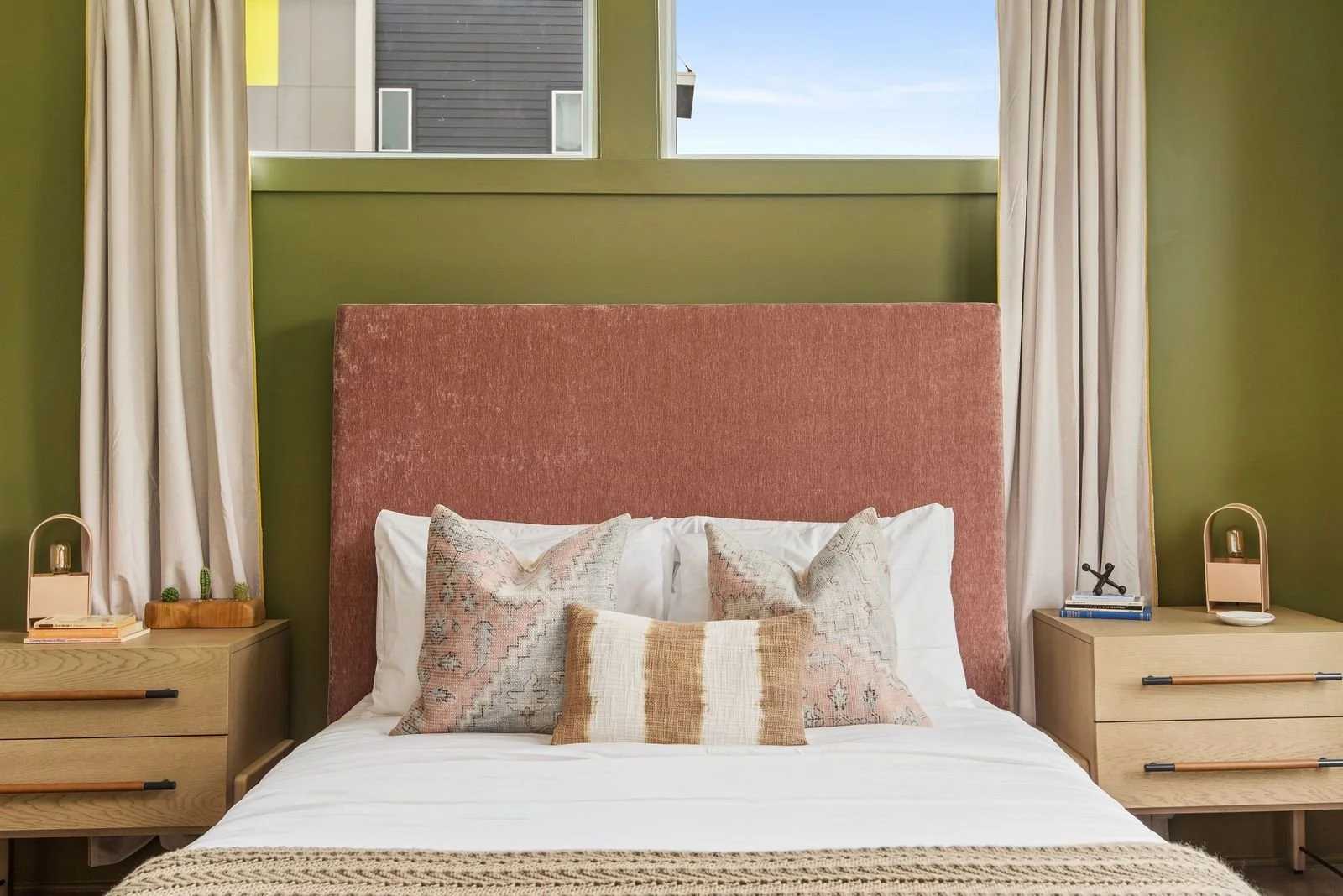
Most rooms are drawn in outline: a wall color, then a crisp white line of trim, then a white ceiling floating overhead. Color drenching erases the outline. You choose one color and let it run over the walls, the baseboards, the window casings, the doors and, most of the time, the ceiling. The result feels less like a painted room and more like stepping inside the color itself.
It sounds bold, and it can be. But done with care, a color drenched room is often calmer than a conventional one, because there is less visual chatter. Here is how we think about it, from picking the shade to deciding whether a room can carry it.
What color drenching actually is (and isn't)
Color drenching is a whole-room paint strategy: one hue on every architectural surface. Some designers allow small shifts, such as the wall in the base color and the trim a half-step deeper, but the principle is that nothing is there to break the color up. No contrast trim, no stark ceiling.
It is not the same as an accent wall, which highlights one plane and leaves the rest neutral. It is also not the same as a dark room. You can drench in a pale oat, a dusty sage or a soft blush, and the effect is just as complete. Depth is a choice, not a requirement.
How to choose a color for drenching
Because the color is going to wrap you, the selection matters more than usual. A shade that looks charming on a two-inch chip can feel very different when it is on six surfaces at once. A few rules we lean on:
- Pick a color with some gray or earth in it. Slightly muddied colors, such as olive rather than kelly green or terracotta rather than tomato, are easier to live inside. Pure, saturated colors can feel loud when there is nowhere for the eye to rest.
- Test large, and test on more than one wall. Paint big sample boards and move them around the room through a full day. Look at them next to the ceiling and down near the floor, where the light is lowest.
- Read the light. North-facing rooms pull cool, so warm colors help. Rooms with strong western sun can make warm colors glow orange by late afternoon. Evening matters too: check your sample under the lamps you actually use.
- Start from something you already love. A rug, a piece of art, a leather sofa or the stone on a fireplace can hand you the color. Drenching works best when it supports what is already in the room rather than fighting it.
- Think about adjoining rooms. If you can see into the drenched room from a white hallway, that contrast becomes a design moment. Make sure it is one you like.
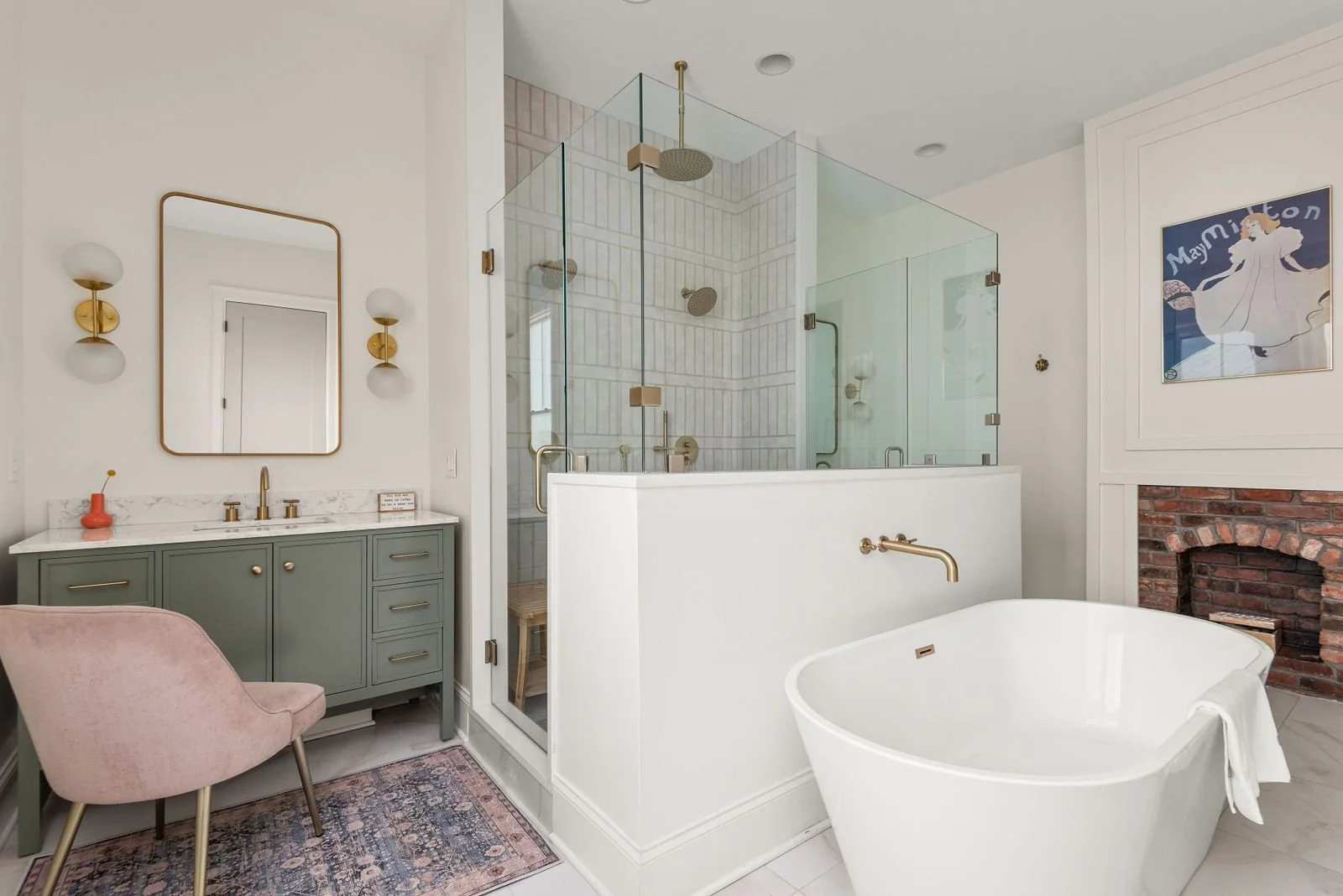
Sheen choices across walls, trim and ceiling
This is where a drenched room goes from flat to beautiful. Keeping the same color while shifting the sheen gives you subtle dimension, the same way a tonal outfit works because the fabrics change.
Ceiling: flat or matte
A flat finish on the ceiling absorbs light, hides surface imperfections and keeps the ceiling from bouncing glare back down. It is the quietest plane in the room, and it should be.
Walls: matte or eggshell
Matte gives you that soft, velvety depth that makes drenched rooms look so good in photos. Eggshell has a little more sheen and wipes clean more easily, which is worth it in a kid's room, a hallway or a vacation rental where walls take a beating.
Trim, doors and built-ins: satin or semi-gloss
Trim and doors get touched constantly, so they need a tougher finish. Satin keeps the look soft; semi-gloss makes the millwork read more clearly and stands up to scuffs. Either way, the slight sheen difference lets your casings and panel profiles show up without a contrasting color.
One practical note: deeper colors can show flashing and lap marks more than pale ones, and many deep bases need extra coats. Hire a painter who is comfortable with dark colors and full-room work, and budget the time.
Rooms where color drenching works
Small rooms
Powder rooms, studies, laundry rooms and mudrooms are natural candidates. They are rooms you pass through or spend focused time in, and drenching turns their small size into intimacy. Without the white trim drawing every corner, the walls seem to recede.
Dining rooms
A dining room is mostly used in the evening, under warm light, often with candles. That is exactly when deep drenched colors look their best. Terracotta, oxblood, deep green and inky blue all make a table feel like an occasion. Pair the walls with a warm-toned pendant and the room glows.
Bedrooms
A color drenched bedroom is one of the most restful rooms you can make. Muted blues, soft greens and warm clay tones all work. Keep the bedding and window treatments in tones close to the paint, add texture through linen and wool, and let the ceiling carry the color so you are not looking up at a bright white field when you lie down.
Garages
This is the one people do not expect. Garage walls are usually a mix of builder-grade paint, patched holes and mismatched doors. Drenching the walls, trim and doors in one color hides that patchwork and turns a storage space into a finished room, so a gear wall, a workout corner and a lounge area can all feel like they belong together.
Vacation rentals
For short-term-rental owners, a drenched room is a memorable, photographable moment that does not require expensive finishes. One drenched bunk room or reading nook can give a listing a signature space. Our vacation rental design work often uses color this way.
Color drenching ideas to get you started
- Drench the ceiling only in a slightly lighter mix if a full-strength ceiling feels like too much. You keep the wrap without the weight.
- Paint the radiator, vents and outlet covers in the same color. Small details are what make it look intentional.
- Carry the color onto built-in shelving so books and objects become the contrast.
- Use a tonal fabric on a headboard, curtain or upholstered bench in a shade close to the paint.
- Add contrast through metal and wood, such as brass, walnut or blackened steel, rather than white.
- Drench a door you want to celebrate, including the frame and hardware backplate, even if the rest of the hall stays light.
When not to drench
Color drenching is not right for every room. Very large open-plan spaces with no natural stopping point can be hard to drench without it spilling into the kitchen and beyond. Rooms with beautiful stained millwork usually should not have it painted over, a point we cover in our article on designing interiors for a historic Nashville home. And if you are not sure you will love living inside the color, start small with a powder room before committing your main living space.
Frequently asked questions
What is color drenching?
Color drenching means painting a room's walls, trim, baseboards, doors and usually the ceiling in one color, or in very close variations of it. Instead of white trim outlining the room, the color wraps every surface so the space reads as one calm, enveloping envelope.
Does color drenching make a small room look smaller?
Usually the opposite. When there is no contrast line between wall, trim and ceiling, the eye has fewer edges to stop on, so corners soften and the room's boundaries feel less defined. A small room drenched in a mid-tone or deep color tends to feel cozy and intentional rather than cramped.
What sheen should I use for color drenching?
A common approach is a flat or matte finish on the ceiling, matte or eggshell on the walls, and satin or semi-gloss on trim and doors. Keeping the color identical while shifting the sheen adds quiet dimension and puts the more durable finish where hands and shoes actually touch.
Can you color drench a garage?
Yes. Garages are one of the best places to try it because the walls, doors and trim are often a patchwork of builder white and scuffs. A single drenched color pulls storage, gear and furniture into one finished room. ESI used a color.
Thinking about drenching a room in your home or rental? We can help you choose the color, set the sheens and plan the furnishings around it. Start a project with Evane Stoner Interiors and tell us which room you have in mind.
Keep reading
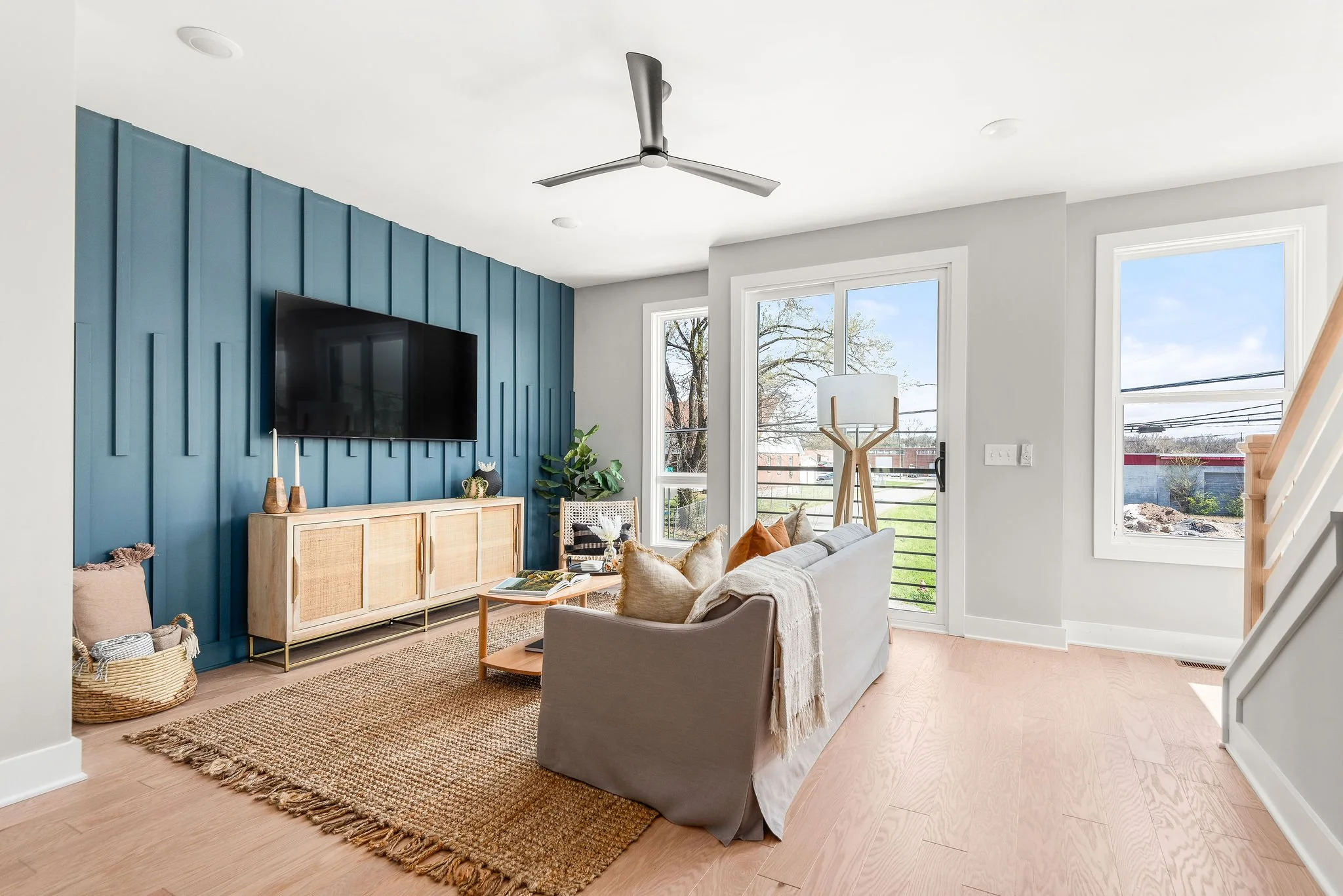
Designing a Historic Nashville Home Without Erasing Its Character
Craftsman bungalows, Victorians, Tudors and mid-century ranches each have a point of view. Here is how to update a historic Nashville home so it works for modern life and still feels like itself.
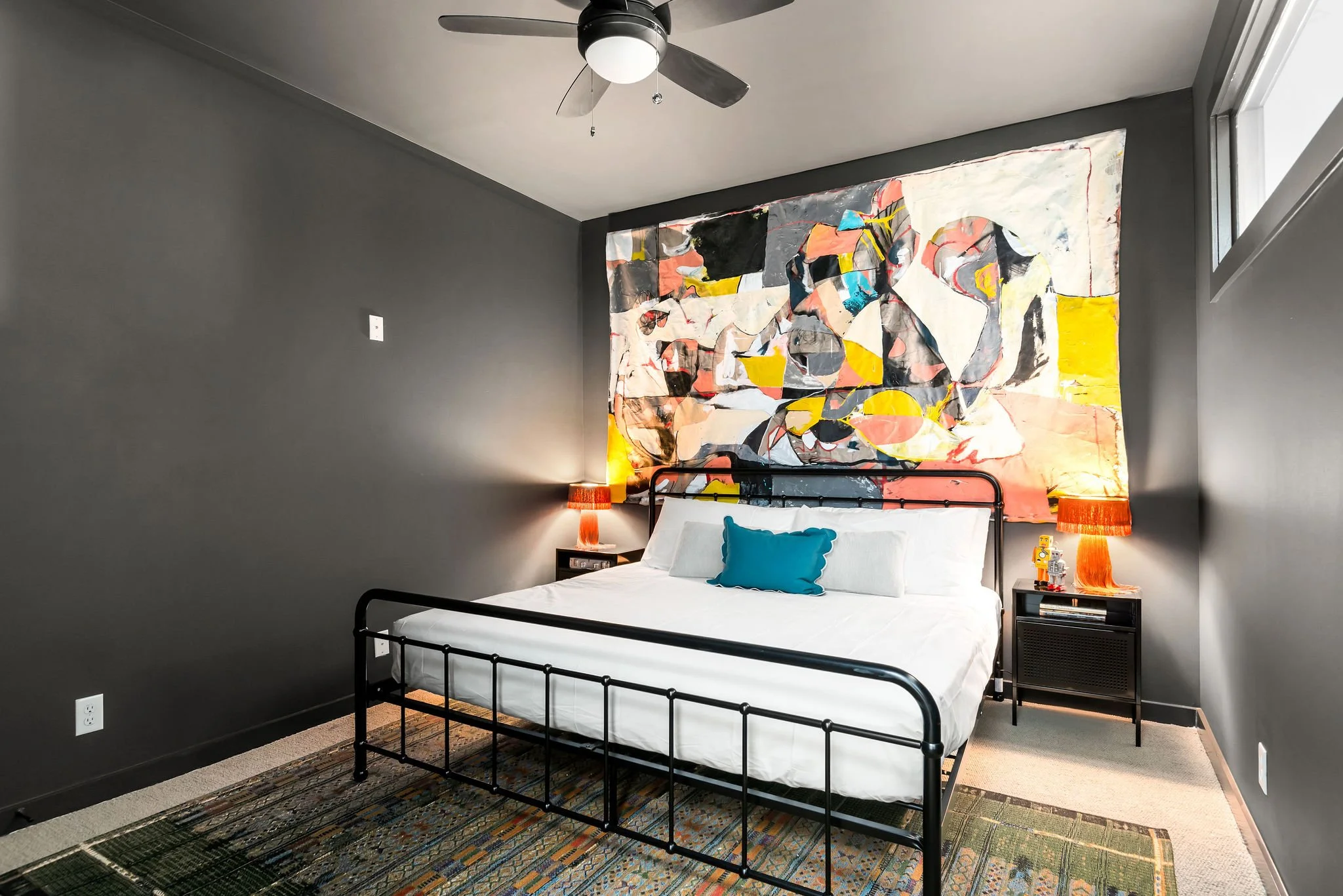
Themed Vacation Rentals in Nashville: How to Feel Authentic, Not Kitschy
A themed Airbnb can be the most memorable stay in a guest's trip or the most forgettable. Here is how we design Nashville themes that feel rooted and real.