Home / Journal / Working With a Designer
Working With a DesignerHow Much Does an Interior Designer Cost? A Guide to How Designers Charge

"How much does an interior designer cost?" is one of the first questions people ask, and one of the hardest to answer in a sentence. The honest answer is that it depends on how the designer charges, what the project includes and how much of the work you want them to take on. The good news is that once you understand the main fee models, comparing designers gets much easier.
This guide skips the made-up averages you see online and focuses on what actually helps: how each pricing model works, what it means for your budget, and the questions to ask so there are no surprises.
Two separate buckets: design fees and project costs
Before looking at fee models, separate your budget into two buckets. Mixing them up is the most common source of confusion around interior design cost.
- Design fees pay for the designer's time and expertise: consultations, space planning, concept development, selections, drawings, revisions, sourcing and coordination.
- Project costs are everything you are buying or building: furniture, lighting, rugs, fabric, wallpaper, paint, art, freight, delivery, receiving, installation and any contractor work.
For most projects, project costs are the larger bucket. A designer's job is often to help you spend that bucket well, which is where much of the value shows up.
The common ways interior designers charge
Hourly
You pay for the time the designer and their team spend on your project. This is common and transparent: you can see where time goes, and you pay for what you use. The trade-off is that the total is less predictable up front, especially if decisions take longer or the scope grows. An interior designer hourly rate also may differ for the principal and for other team members, so ask.
Flat fee
The designer quotes a fixed price for a defined scope, such as a single room or a complete design package. You know the number from the start. The catch is that the scope has to be very clearly defined, and changes or additions usually mean an additional fee.
Percentage of project cost
Some designers charge a percentage of the total project or furnishings budget. This scales with project size and can be simple to understand. It also means the fee rises as the budget rises, so make sure you know exactly which costs the percentage is calculated on.
Cost-plus purchasing
Many designers purchase furnishings through trade vendor accounts and charge the client the trade price plus a markup, or a set purchasing fee. This can be combined with any of the models above. Ask how purchasing is priced and how it is shown on invoices.
Retainers
A retainer is an amount paid up front to secure the designer's time and start work. What matters is how it is applied. Some retainers are credited against future billing; others are a separate fee. Some are refundable; many are not. Get this in writing.
Hybrids
Plenty of studios combine models, for example a flat design fee plus cost-plus purchasing, or hourly design plus a purchasing fee. Hybrids are not a red flag. Unclear hybrids are.
How Evane Stoner Interiors charges
We bill design services hourly, against a retainer. Here is how that works in practice:
- A non-refundable retainer is collected to begin work and is applied as a credit against hourly billing, not charged on top of it.
- Services are billed at a standard hourly rate, with monthly invoicing so you can follow along.
- We present a Design Plan, followed by up to two rounds of revisions.
- After the Design Plan is approved, we source and purchase materials and furnishings through trade-exclusive vendor accounts, with a purchasing deposit collected before orders are placed. Custom items cannot be cancelled once ordered.
- We recommend contractors for fabrication and installation but do not select, manage or supervise them unless agreed in writing, and we do not provide architecture or landscape design.
We discuss specific fees during the consultation, because the right number depends on your scope, timeline and how involved you want us to be. You can read more on our process page and see what we offer on our services page.
What drives the total cost
Whatever the fee model, the same factors push a project's total up or down:
- Scope. One room versus a whole house, a single rental versus a portfolio, a refresh versus a renovation.
- Custom work. Custom upholstery, millwork and fabrication take more design time and more coordination.
- Decision speed. On hourly projects, quick and clear decisions save money. Revisiting settled choices costs it.
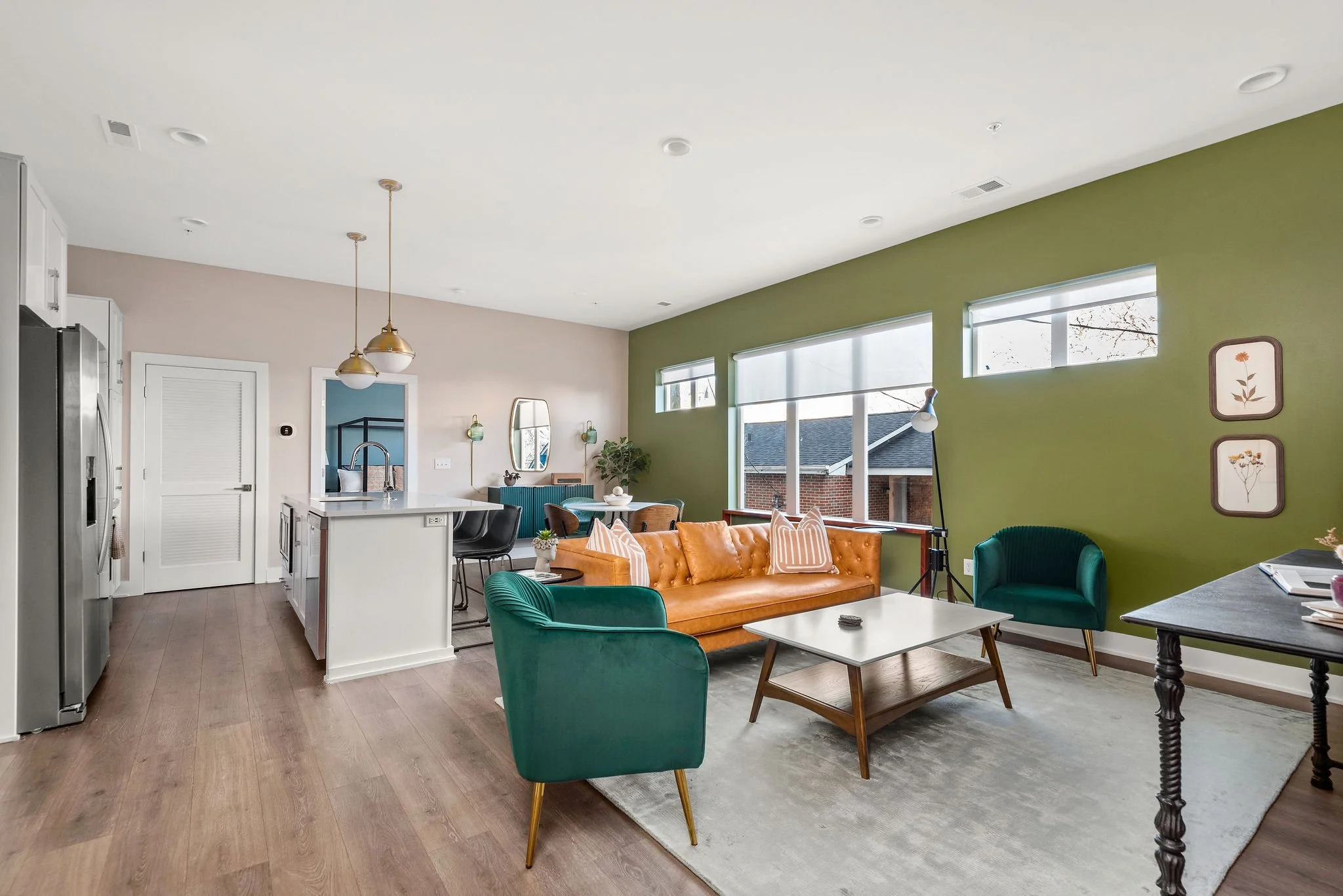
- Existing pieces. Reusing furniture you love can reduce purchasing costs, as in our East Nashville townhome project, where an existing leather sofa and chair were reused and repositioned.
- Timeline. Rushed schedules limit sourcing options and can add freight or labor costs.
- Commercial requirements. Hospitality and rental projects often call for more durable, commercial-grade products.
How to budget for an interior designer
- Set a total number you are comfortable with, including both design fees and project costs.
- List your priorities. Which rooms or pieces matter most? Where can you phase work over time?
- Ask each designer to explain their model using your project as the example, not a generic one.
- Build in a contingency for freight, delivery, price changes and the surprise you did not see coming.
- Agree on how you will track spending, whether that is monthly invoices, a shared budget sheet or regular check-ins.
Questions to ask about fees
- How do you bill design time, and who on your team bills at what rate?
- Is there a retainer? Is it credited toward billing, and is it refundable?
- How is purchasing priced, and are freight, delivery and installation separate?
- How many revision rounds are included before additional fees apply?
- How often will I be invoiced, and what will the invoices show?
- What happens if the scope changes partway through?
For more questions to bring to your first meeting, see our guide to preparing for an interior design consultation.
Frequently asked questions
What is a typical interior designer hourly rate?
Rates vary widely by market, experience, project type and scope, so any single number is misleading. Ask each designer for their rate directly and ask what is billed hourly versus handled another way.
Is a retainer an extra fee?
It depends on the designer. At Evane Stoner Interiors, the non-refundable retainer is applied as a credit against hourly billing rather than charged on top.
Do interior design fees include furniture?
Usually not. Design fees pay for the designer's time and expertise. Furniture, materials, freight, delivery and installation are typically separate costs.
How does Evane Stoner Interiors charge?
ESI bills design services hourly against a retainer, with monthly invoicing. Fees are discussed during the consultation so they can be matched to your project.
The fastest way to get a real answer for your project is to talk it through. Reach out to schedule a consultation, and we will walk you through scope, fees and next steps in plain English.
Keep reading
How to Prepare for an Interior Design Consultation
What to bring, what to expect and which questions to ask, so your first meeting with an interior designer is productive instead of polite small talk.
Interior Designer vs. Decorator: What an Interior Designer Actually Does
Designers and decorators overlap, but they are not the same. Here is what an interior designer actually does, what full service means, and how to pick the right help.
Themed Vacation Rentals in Nashville: How to Feel Authentic, Not Kitschy
A themed Airbnb can be the most memorable stay in a guest's trip or the most forgettable. Here is how we design Nashville themes that feel rooted and real.